
Anúncios
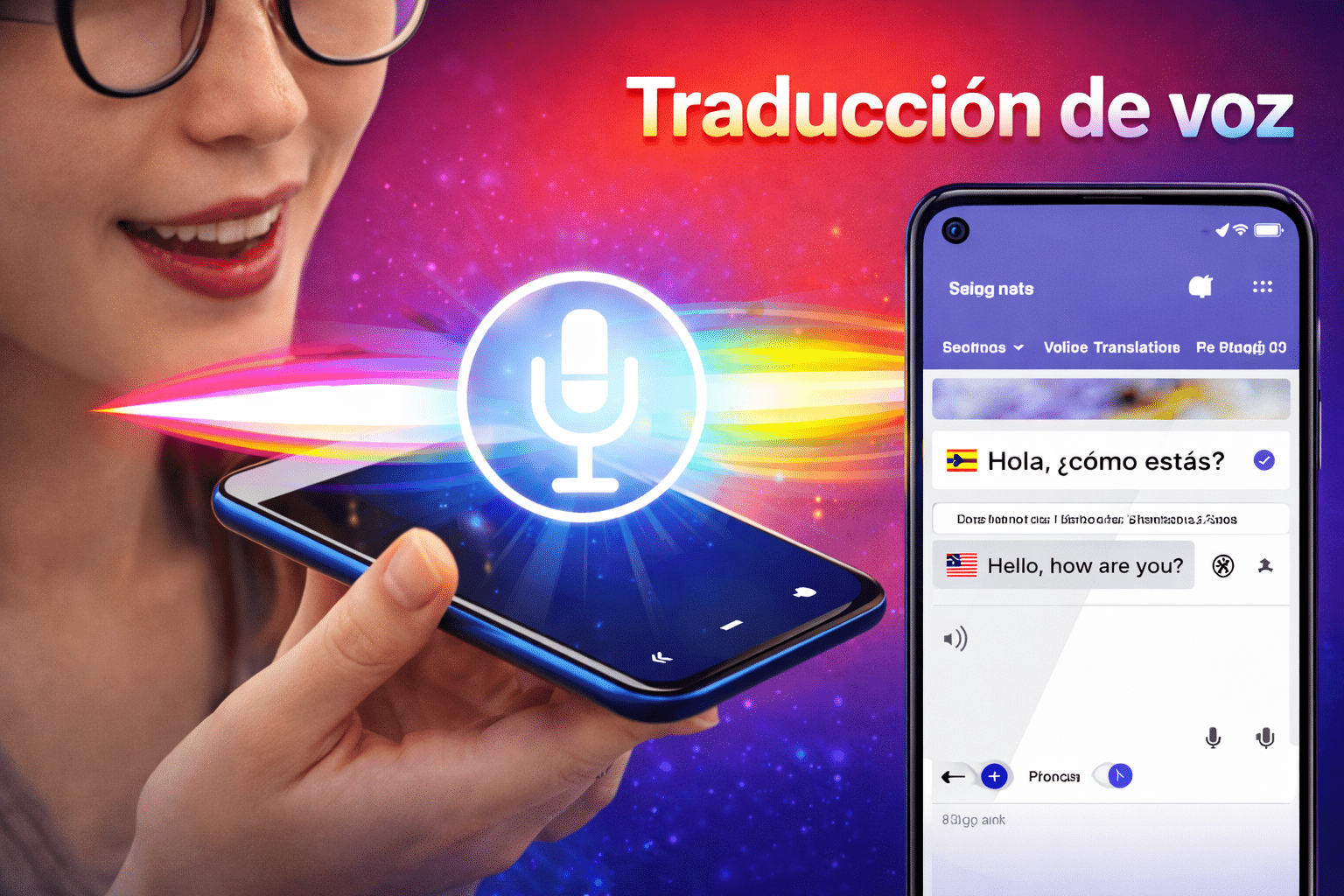
Traveling the world or navigating daily multilingual interactions just got easier with voice translator apps on your smartphone—speak, and it instantly translates your words into another language.


Imagine landing in Tokyo, Paris, or Barcelona without speaking a word of the local language. The stress of ordering food, asking for directions, or booking a hotel room can quickly turn an exciting adventure into a frustrating experience. Fortunately, technology has bridged this communication gap in remarkable ways.
Anúncios
Voice translation apps have revolutionized how we communicate across language barriers. These powerful tools fit right in your pocket, ready to translate conversations in real-time. Whether you’re a frequent globetrotter, a business professional attending international conferences, or someone who occasionally needs to communicate in different languages, voice translator apps have become indispensable companions in our interconnected world.
🌍 Why Voice Translation Technology Matters More Than Ever
The world is more connected than ever before. International travel has become accessible to millions, remote work allows collaboration across continents, and global commerce requires seamless communication between diverse linguistic communities. Yet, language barriers remain one of the most significant obstacles to meaningful human connection and effective communication.
Anúncios
Traditional translation methods—phrasebooks, bilingual dictionaries, or even written translation apps—require time, effort, and often disruption to the natural flow of conversation. Voice translation technology eliminates these friction points by enabling spontaneous, natural dialogue between people who speak different languages.
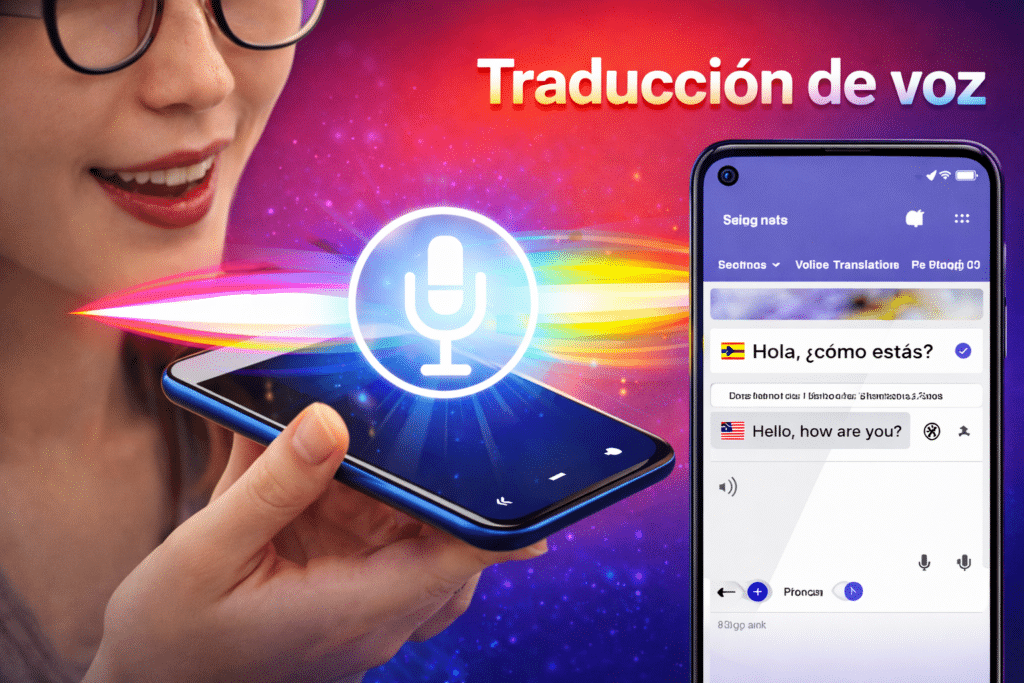
The beauty of voice translator apps lies in their simplicity. You speak naturally in your language, the app processes your words using advanced speech recognition technology, translates the content using sophisticated neural networks, and outputs the translation in spoken form—all within seconds. This seamless process makes cross-language communication feel almost magical.
📱 How Voice Translator Apps Actually Work
Understanding the technology behind voice translation helps appreciate just how remarkable these apps truly are. The process involves several sophisticated steps that happen almost instantaneously:
First, the app uses speech recognition technology to convert your spoken words into text. This involves analyzing audio patterns, identifying individual words, understanding context, and accounting for accents, speech patterns, and background noise. Modern apps use machine learning models trained on millions of voice samples to achieve impressive accuracy.
Next, the text undergoes translation using neural machine translation (NMT) systems. These AI-powered engines don’t just translate word-for-word; they understand context, idioms, cultural nuances, and grammatical structures to produce natural-sounding translations that preserve the intended meaning of the original speech.
Finally, text-to-speech technology converts the translated text back into spoken audio. High-quality apps use natural-sounding voices that respect pronunciation rules, intonation patterns, and speaking rhythms of the target language, making the output easy to understand for native speakers.
✈️ Essential Travel Scenarios Where Voice Translation Shines
Voice translator apps prove invaluable in countless real-world situations. Let’s explore some scenarios where having instant translation capability in your pocket transforms challenges into seamless experiences.
🍽️ Restaurant and Food Ordering
Dining in foreign countries offers wonderful cultural experiences, but navigating menus written in unfamiliar scripts can be daunting. Voice translator apps allow you to ask servers about ingredients, preparation methods, and recommendations. You can inquire about allergies, dietary restrictions, or request modifications—all while having natural conversations that enhance your dining experience.
🚕 Transportation and Navigation
Getting around in foreign cities becomes significantly easier with voice translation. Whether you’re negotiating with taxi drivers, asking locals for directions, understanding public transportation announcements, or clarifying travel routes, instant translation eliminates confusion and helps you reach your destinations safely and efficiently.
🏨 Hotel and Accommodation Communication
From check-in procedures to requesting room service, reporting maintenance issues, or asking about local attractions, voice translator apps facilitate smooth communication with hotel staff. This ensures your accommodation needs are met promptly and accurately, enhancing your overall travel comfort.
🏥 Emergency and Medical Situations
In urgent situations where precise communication can be critical, voice translator apps provide essential support. Explaining symptoms to healthcare providers, understanding medical instructions, or communicating with emergency services becomes possible even when you don’t speak the local language. While professional medical interpreters are always preferable for complex situations, these apps serve as valuable immediate resources.
🛍️ Shopping and Market Interactions
Haggling in local markets, asking about product features, understanding pricing, or inquiring about return policies all become manageable with voice translation. These interactions often lead to more authentic cultural exchanges and better shopping experiences, as vendors appreciate your effort to communicate despite language differences.
💼 Professional Applications Beyond Tourism
While travel represents the most obvious use case, voice translator apps serve numerous professional purposes that extend far beyond vacation scenarios.
International business meetings benefit enormously from real-time translation capabilities. While professional interpreters remain essential for high-stakes negotiations, voice translator apps facilitate informal conversations, clarify points during breaks, and help build relationships with international colleagues and clients.
Remote teams working across multiple countries use voice translation to enhance collaboration. Quick questions, brainstorming sessions, and casual team bonding become more inclusive when language barriers diminish. This technology democratizes participation in global work environments.
Educational contexts also leverage voice translation effectively. Students learning new languages practice pronunciation, verify understanding, and expand vocabulary. Teachers working with multilingual classrooms use these tools to ensure all students comprehend important concepts and instructions.
Customer service representatives assisting international clients provide better support when equipped with voice translation capabilities. This technology enables companies to serve diverse customer bases without requiring extensive multilingual staff, improving both service quality and customer satisfaction.
🔧 Key Features to Look for in Quality Voice Translator Apps
Not all voice translation apps offer the same capabilities or user experience. When selecting an app for your needs, consider these important features:
🌐 Language Coverage and Availability
The best apps support dozens or even hundreds of languages, including both widely spoken languages like Spanish, Mandarin, and Arabic, as well as less common regional languages. Comprehensive coverage ensures you’re prepared for travels anywhere in the world or interactions with diverse communities.
📶 Offline Functionality
Internet connectivity isn’t always reliable, especially when traveling internationally. Premium voice translator apps offer offline modes that download language packs to your device, enabling translation without data connections. This feature proves invaluable in rural areas, during flights, or when roaming charges make data usage prohibitively expensive.
🎯 Translation Accuracy and Natural Output
Accuracy remains the most critical factor in translation quality. The best apps employ advanced neural networks that understand context, handle idioms appropriately, and produce natural-sounding translations that native speakers easily comprehend. Poor translations can lead to misunderstandings or even offensive communication, so quality matters significantly.
🎤 Voice Recognition Quality
Effective voice recognition that handles various accents, speech speeds, and ambient noise conditions separates excellent apps from mediocre ones. Apps should accurately capture your spoken words even in noisy environments like busy streets, crowded restaurants, or airports.
🔄 Conversation Mode
Many advanced apps offer conversation mode, which automatically detects which language is being spoken and translates back and forth seamlessly. This feature enables natural dialogue flow without manually switching between languages, making extended conversations feel more organic and less technical.
📸 Additional Input Methods
While voice remains the primary input method, the best apps also support text input, camera translation for signs and menus, and handwriting recognition. This versatility ensures you can communicate effectively regardless of the situation or your comfort level with speaking aloud.
🚀 Tips for Maximizing Voice Translation Effectiveness
Getting the best results from voice translator apps requires understanding how to use them most effectively. These practical tips will help you communicate more successfully:
Speak clearly and at a moderate pace. While these apps handle natural speech remarkably well, speaking too quickly, mumbling, or using excessive filler words can reduce accuracy. Enunciate clearly without shouting or speaking unnaturally slowly—aim for the clarity you’d use when speaking to someone hard of hearing.
Use complete sentences with proper grammar. Apps translate context better when you provide complete thoughts rather than fragmented phrases. Instead of saying “bathroom where,” ask “Where is the bathroom?” This provides the translation engine with grammatical structure that produces more accurate results.
Avoid idioms and complex expressions. While advanced translation systems increasingly handle figurative language, idioms often don’t translate directly between languages. Stick to straightforward expressions when possible, especially for important communications where misunderstanding could cause problems.
Verify understanding through confirmation. After receiving a translation, consider having the other person respond, which the app then translates back to your language. This confirmation loop helps ensure mutual understanding and catches any translation errors before they cause confusion.
Maintain appropriate volume levels. In quiet environments like libraries, museums, or religious sites, use earphones or lower the output volume to avoid disturbing others. In noisy environments, position your phone’s microphone closer to your mouth and increase output volume as needed.
Prepare key phrases in advance. For important communications, consider typing out critical phrases beforehand and saving translations. This allows you to review accuracy and ensure important information is conveyed precisely, which is particularly useful for medical information, addresses, or specific requirements.
🔐 Privacy and Security Considerations
When using voice translator apps, especially for sensitive conversations, understanding privacy implications is essential. Your spoken words are typically transmitted to cloud servers for processing, raising legitimate questions about data security and privacy.
Reputable translation apps implement encryption for data transmission and storage, ensuring your conversations remain private during processing. However, reviewing privacy policies helps you understand how your data is used, whether conversations are stored, and how long data is retained.
For particularly sensitive conversations—medical information, business secrets, or personal matters—consider apps offering enhanced privacy features, offline modes that don’t transmit data externally, or end-to-end encryption. Some professional-grade apps specifically market themselves to privacy-conscious users and organizations.
Be cautious about using voice translation for highly confidential business negotiations, legal matters, or communications involving protected information. In these scenarios, professional human interpreters with confidentiality agreements provide appropriate security levels that automated apps cannot guarantee.
🌟 Real-World Success Stories and User Experiences
Countless travelers and professionals share remarkable stories about how voice translator apps transformed potentially difficult situations into positive experiences. These real-world examples illustrate the practical impact of this technology.
A solo traveler in rural Japan used a voice translator to communicate with a local family after getting lost hiking. Not only did they receive accurate directions, but the technology facilitated a warm conversation that led to an invitation for tea and an unforgettable cultural exchange that wouldn’t have been possible without instant translation.
An international business consultant closed a significant contract in Brazil despite speaking no Portuguese. While professional interpreters handled formal negotiations, the consultant used voice translation during informal dinners and social events, building personal relationships that proved crucial to the deal’s success.
A teacher working with refugee students used voice translation to communicate with parents during conferences, ensuring families understood their children’s progress and school requirements. This technology helped bridge communication gaps that previously prevented effective family engagement in education.
An elderly traveler experiencing a medical emergency in Spain used voice translation to explain symptoms to emergency responders and understand medical instructions. The app’s assistance during this stressful situation ensured appropriate treatment and provided peace of mind during a frightening experience.
🔮 The Future of Voice Translation Technology
Voice translation technology continues evolving rapidly, with exciting developments on the horizon that promise even more seamless cross-language communication.
Artificial intelligence improvements will deliver increasingly natural translations that better capture nuance, humor, and cultural context. Machine learning models trained on ever-larger datasets will handle regional dialects, slang, and specialized terminology with greater accuracy.
Real-time translation with minimal delay will eventually become imperceptible, making conversations flow as naturally as speaking the same language. Current systems already impressively fast will become instantaneous as processing power increases and algorithms become more efficient.
Augmented reality integration will overlay translated text directly onto the physical world through smartphone cameras or smart glasses. Imagine looking at a foreign language sign and seeing instant translation superimposed over the original text in your field of vision.
Emotional tone recognition will help translation systems convey not just words but also the speaker’s emotional state and intention. This advancement will make translated conversations feel more authentic and reduce misunderstandings caused by missing emotional context.
Wearable translation devices will become more sophisticated and socially acceptable, perhaps eventually replacing smartphone-based translation with more discrete, always-available options like earbuds that provide real-time translation directly into your ear.
💡 Making the Most of Your Multilingual Journey
Voice translator apps represent powerful tools, but they work best when combined with cultural awareness, patience, and genuine curiosity about other languages and cultures. Technology facilitates communication, but human connection requires more than just translated words.
Learning basic phrases in languages you frequently encounter shows respect and often makes interactions warmer and more successful. Even with translation technology available, attempting to greet people, say thank you, or exchange pleasantries in their language demonstrates cultural appreciation that pure technology cannot convey.
Approach cross-language interactions with patience and humor. Translation technology, while remarkable, isn’t perfect. Occasional misunderstandings will happen, and handling them with good humor and flexibility makes these moments memorable rather than frustrating.
Use translation technology as a bridge rather than a barrier. Make eye contact, use gestures naturally, and engage authentically with people despite language differences. The technology handles words, but your genuine interest and respect create meaningful connections.
🎯 Choosing the Right App for Your Specific Needs
With numerous voice translator apps available, selecting the right one depends on your specific requirements, budget, and usage patterns. Consider these factors when making your choice:
Frequent international travelers benefit most from premium apps with extensive offline capabilities, broad language coverage, and advanced features like conversation mode and camera translation. The investment in a subscription service pays dividends through consistently reliable performance in diverse situations.
Occasional users who need translation infrequently might prefer free apps with basic functionality. While these typically require internet connectivity and may show advertisements, they adequately serve sporadic translation needs without ongoing costs.
Business professionals requiring translation for work should prioritize apps with strong accuracy, privacy features, and professional terminology databases. Some apps specialize in business and technical language, offering superior performance for corporate communications.
Language learners benefit from apps that provide both translation and educational features, such as pronunciation guides, grammar explanations, and vocabulary building tools. These hybrid apps serve dual purposes, facilitating both communication and learning.
🌏 Breaking Down Barriers, Building Connections
At its core, voice translation technology represents more than just convenient communication—it embodies humanity’s ongoing effort to connect across differences and understand one another despite various barriers. Each successful translation represents a small but meaningful victory against isolation and misunderstanding.
The ability to communicate across language barriers opens doors to experiences, relationships, and opportunities that would otherwise remain inaccessible. Whether you’re ordering street food in Bangkok, discussing art in Florence, or collaborating with colleagues in Seoul, voice translator apps empower you to engage fully with the world’s incredible diversity.
These tools democratize international experience, making global travel and communication accessible to people who might otherwise feel intimidated by language barriers. You don’t need to be a polyglot to explore the world confidently or to build meaningful relationships with people from different linguistic backgrounds.
As translation technology continues improving, the dream of seamless universal communication moves closer to reality. While preserving linguistic diversity and encouraging language learning remain important, eliminating communication barriers creates a more connected, understanding, and cooperative global community.
So whether you’re planning your next international adventure, working with global colleagues, or simply curious about communicating beyond your native language, embrace the power of voice translation technology. Download a quality app, explore its features, and discover how this remarkable tool can transform the way you connect with the world. The ability to understand and be understood in any language is no longer a distant dream—it’s literally at your fingertips, ready to help you communicate, explore, and connect without limits. 🌍✨
