
With 5G networks expanding globally, millions of users are exploring apps designed to activate and optimize their 5G connectivity for faster speeds and improved performance.
The transition from 4G to 5G represents one of the most significant technological leaps in mobile connectivity. However, many smartphone users remain unaware that their devices might not automatically switch to 5G networks, even when available. This is where specialized applications come into play, offering tools to force network mode changes and ensure your device takes full advantage of fifth-generation wireless technology.
Understanding how these apps work, their benefits, and their limitations can help you make informed decisions about optimizing your mobile experience. Whether you’re streaming high-definition content, gaming online, or simply browsing, having control over your network settings can dramatically improve your daily smartphone usage.
📱 What Are 5G Activation Apps and How Do They Work?
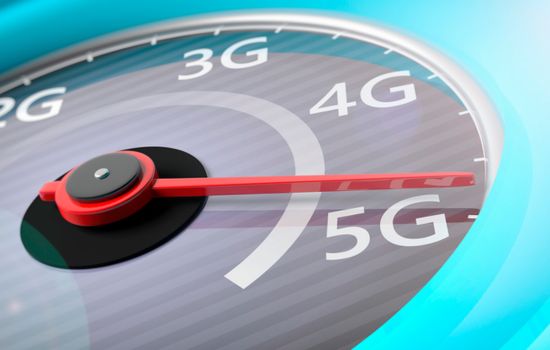
5G activation apps are specialized utilities designed to help users access hidden network settings on their smartphones. These applications provide a user-friendly interface to switch between different network modes, including 2G, 3G, 4G, and 5G connections.
Most modern smartphones contain advanced network capabilities that aren’t always exposed through standard settings menus. Manufacturers often bury these options deep within technical menus to prevent accidental changes by average users. However, tech-savvy individuals and those seeking maximum performance want direct access to these controls.
These apps essentially act as shortcuts to your device’s engineering mode or field test settings. They allow you to prioritize specific network types, force your phone to connect to 5G towers when available, and troubleshoot connectivity issues without navigating complex hidden menus.
The functionality typically includes network mode selection, signal strength monitoring, carrier information display, and connection diagnostics. Some advanced versions offer additional features like speed testing, tower mapping, and real-time data usage tracking.

🚀 Why Your Phone Might Not Connect to 5G Automatically
Understanding why your 5G-capable device doesn’t always connect to 5G networks is crucial before using any activation app. Several factors influence automatic network selection on modern smartphones.
First, your carrier plan must include 5G access. Many users assume that owning a 5G phone automatically grants them access, but network operators often require specific plan upgrades or additional fees for 5G connectivity. Always verify your subscription details before troubleshooting technical issues.
Second, network availability plays a massive role. 5G infrastructure remains under development in many regions, with coverage concentrated in urban centers and major metropolitan areas. Your device will naturally fall back to 4G or LTE when 5G towers aren’t within range.
Battery optimization settings represent another common culprit. To extend battery life, many smartphones automatically switch to slower networks when full-speed connectivity isn’t deemed necessary by the operating system’s algorithms. This intelligent switching can frustrate users who prefer maximum speeds regardless of battery impact.
Additionally, some manufacturers implement conservative network policies that prioritize connection stability over speed. Your device might choose a strong 4G signal over a weak 5G signal to maintain consistent performance and prevent frequent disconnections.

🔧 Key Features to Look for in 5G Network Apps
Not all 5G activation apps offer the same functionality or user experience. When selecting an application to manage your network settings, several features distinguish exceptional tools from basic utilities.
The interface design matters significantly. The best apps present complex technical information in digestible formats, using visual indicators like signal bars, speed meters, and color-coded status displays. You shouldn’t need an engineering degree to understand your connection status.
Network mode switching should be straightforward with clearly labeled options. Look for apps that offer presets like “5G Only,” “5G/4G Auto,” or “4G Preferred” rather than cryptic technical codes that confuse average users.
Real-time signal monitoring provides valuable insights into your connectivity. Apps that display signal strength in both percentage and dBm values, along with tower information and frequency bands, help you understand exactly what your device is connecting to and why.
Speed testing integration eliminates the need for separate applications. Built-in speed tests that measure download, upload, and latency specifically on your current network mode help you compare 5G performance against 4G connections in your area.
Some advanced applications include tower mapping features that show nearby cell towers on a map interface. This functionality is particularly useful for finding optimal locations with strong 5G signals when working remotely or traveling.
⚡ The Real Benefits of Forcing 5G Connection
Activating 5G manually through dedicated apps delivers tangible advantages for users in areas with adequate coverage. Understanding these benefits helps you decide whether manual network control suits your needs.
Download speeds represent the most obvious improvement. 5G networks theoretically deliver speeds up to 100 times faster than 4G, though real-world performance typically ranges from 150 Mbps to 1 Gbps depending on your location and carrier implementation. This translates to downloading full HD movies in minutes rather than hours.
Latency reduction significantly enhances interactive experiences. 5G networks can achieve latency as low as 1 millisecond compared to 30-50 milliseconds on 4G connections. Gamers, video callers, and remote workers notice immediate improvements in responsiveness and real-time communication quality.
Network congestion handling improves dramatically on 5G infrastructure. These networks support exponentially more simultaneous connections per tower, meaning your speeds remain consistent even in crowded venues like stadiums, concerts, or busy urban areas where 4G networks typically slow to a crawl.
Streaming quality automatically adjusts to take advantage of available bandwidth. When connected to 5G, platforms like YouTube, Netflix, and Disney+ can deliver 4K or even 8K content without buffering, provided your data plan supports the usage.
Upload speeds see proportional improvements as well. Content creators who share videos, photos, or large files directly from their smartphones benefit enormously from 5G’s enhanced uplink capabilities, making mobile content creation genuinely practical.
⚠️ Important Limitations and Considerations
While 5G activation apps offer compelling benefits, users must understand their limitations and potential drawbacks before relying on them extensively.
Battery consumption increases noticeably when forcing 5G connections. Fifth-generation modems consume significantly more power than their 4G predecessors, especially when signal strength is marginal. Expect 20-40% faster battery drain when maintaining continuous 5G connectivity throughout the day.
Signal penetration presents ongoing challenges for 5G technology. Higher frequency bands used for ultra-fast 5G (mmWave) struggle to penetrate buildings, walls, and even windows. You might experience frequent disconnections when moving indoors or between locations, forcing your device to constantly search for signals and further draining battery life.
Data consumption accelerates with faster speeds. When everything loads instantaneously, users tend to consume significantly more data without realizing it. Streaming automatically upgrades to higher resolutions, apps update more frequently, and browsing becomes more media-rich. Monitor your data usage carefully to avoid overage charges.
Not all 5G is created equal. Carriers deploy different flavors of 5G technology, including low-band (nationwide coverage but modest speed improvements), mid-band (balanced coverage and speed), and high-band or mmWave (incredibly fast but extremely limited range). Your experience varies dramatically depending on which type your location offers.
Device compatibility extends beyond simple “5G capable” labels. Different smartphones support different 5G bands and frequencies. An app cannot force your device to connect to 5G bands that your hardware doesn’t physically support, regardless of software capabilities.
🛡️ Safety and Privacy Considerations
Downloading any application that modifies system-level network settings requires careful consideration of safety and privacy implications.
Always download network utilities exclusively from official app stores like Google Play Store or Apple App Store. Third-party websites and unofficial sources pose significant security risks, potentially bundling malware with legitimate-seeming network tools. Official stores implement security scanning and developer verification to protect users.
Review permission requests carefully before installation. Legitimate network apps require access to phone state information and network settings, but they shouldn’t need access to your contacts, camera, microphone, or storage unless they offer specific features justifying those permissions.
Check developer credentials and user reviews thoroughly. Established developers with multiple applications and transparent company information inspire more confidence than anonymous creators with single apps and no online presence. User reviews often reveal issues like excessive advertising, hidden subscriptions, or unexpected behavior.
Be aware that some apps include advertising to support free versions. While ads themselves aren’t necessarily problematic, aggressive ad implementations that interrupt functionality or redirect users to suspicious websites should be avoided. Consider supporting quality apps through one-time purchases or subscriptions to access ad-free experiences.
Understand that these apps don’t “hack” or fundamentally alter your device. They simply provide convenient access to existing settings. No app can magically create 5G connectivity where none exists or bypass carrier restrictions on your account.
📊 Comparing 4G and 5G Performance in Real-World Scenarios
Understanding practical performance differences helps set realistic expectations when switching to 5G networks through activation apps.
Streaming services benefit dramatically from 5G bandwidth. A two-hour 4K movie that takes 5-6 minutes to download on quality 4G connections downloads in under a minute on proper 5G networks. Live streaming also sees improvements, with virtually no buffering even at highest quality settings.
Video calling quality transforms on 5G connections. Applications like Zoom, FaceTime, and Google Meet maintain crystal-clear video even with multiple participants, background effects, and screen sharing simultaneously active. The reduced latency creates more natural conversations with less awkward overlap.
Gaming experiences vary significantly. Cloud gaming services like Xbox Cloud Gaming, GeForce Now, and PlayStation Remote Play become genuinely playable on 5G connections, with input lag reduced to levels comparable to wired connections. Competitive mobile gaming sees similar improvements in responsiveness.
File transfers and cloud synchronization happen nearly instantaneously on 5G. Backing up photos to cloud services, syncing documents across devices, or downloading large work files becomes so fast that you barely notice it happening, fundamentally changing how you interact with cloud storage.
Web browsing improvements feel more subtle but accumulate over time. Pages load completely before you can even perceive a delay, apps open with their content already populated, and moving between information sources becomes seamless rather than punctuated by loading indicators.
🌍 Global 5G Availability and Regional Differences
The effectiveness of 5G activation apps depends heavily on your geographic location and carrier infrastructure development.
North America leads in 5G deployment, with carriers in the United States and Canada offering extensive coverage in major cities and steadily expanding to suburban and rural areas. However, the quality varies significantly between carriers, with some prioritizing coverage breadth while others focus on peak speeds in limited areas.
European countries show uneven 5G rollout patterns. Nations like the United Kingdom, Germany, and Switzerland boast impressive urban coverage, while others lag due to regulatory challenges, spectrum allocation delays, or infrastructure investment limitations. Cross-border travelers often experience inconsistent 5G access even within the European Union.
Asian markets demonstrate some of the world’s most advanced 5G implementations. South Korea, China, and Japan have invested heavily in next-generation infrastructure, offering extensive coverage and impressive speeds even in mid-sized cities. These regions often serve as testing grounds for innovative 5G applications and services.
Latin American and African markets continue developing 5G networks, with deployment concentrated in major metropolitan areas and economic centers. Rural and remote regions remain dependent on 4G or even 3G connectivity, making 5G activation apps largely irrelevant outside urban zones.
Australia and New Zealand show steady 5G expansion, though the vast geographic distances and concentrated populations create coverage patterns focused on coastal cities and major inland centers, leaving significant areas without next-generation access.
💡 Tips for Maximizing Your 5G Experience
Beyond simply installing an activation app, several strategies optimize your 5G connectivity and overall mobile experience.
Position matters significantly with 5G signals. When experiencing weak connectivity, moving closer to windows, stepping outside, or elevating your position can dramatically improve signal strength. The higher-frequency 5G bands are particularly sensitive to obstacles and distance from towers.
Time your intensive activities strategically. If you need to download large files or stream high-quality content, doing so while stationary in areas with strong 5G coverage yields better results than attempting the same tasks while moving or in marginal coverage zones.
Monitor your device temperature during extended 5G use. The increased power consumption and processing demands can generate noticeable heat. If your device becomes uncomfortably hot, consider temporarily switching to 4G to allow cooling and prevent potential thermal throttling or battery degradation.
Configure apps to take advantage of 5G when available. Enable automatic quality settings in streaming apps, allow cloud services to sync aggressively when connected to 5G, and adjust app update settings to take advantage of faster speeds without waiting for Wi-Fi.
Regularly restart your device to clear network caches and force fresh connections. Sometimes smartphones maintain problematic network states that prevent optimal 5G connectivity, and a simple restart resolves these issues more effectively than any app.
Keep your device’s operating system and carrier settings updated. Manufacturers and carriers continuously improve 5G performance through software updates that optimize modem behavior, fix connectivity bugs, and enhance battery efficiency during 5G use.
🔮 The Future of Mobile Network Control
As 5G technology matures and 6G research accelerates, the role of network activation apps will continue evolving alongside telecommunications infrastructure.
Artificial intelligence integration will likely automate many manual decisions currently requiring user intervention. Future network management apps might learn your usage patterns, automatically switching between networks based on your activities, location, and preferences without requiring constant manual adjustments.
Network slicing technology will enable unprecedented customization. This 5G feature allows creating virtual networks optimized for specific applications, meaning your gaming traffic could use a low-latency slice while your file downloads use a high-bandwidth slice simultaneously. Apps will help users manage and prioritize these slices according to their needs.
Enhanced diagnostic capabilities will transform troubleshooting. Rather than simply displaying signal strength, next-generation apps will provide actionable insights about network problems, suggest optimal settings, and even communicate directly with carriers to resolve issues automatically.
Integration with smart home and IoT ecosystems will expand app functionality beyond smartphones. Managing network connectivity for dozens of devices simultaneously will require sophisticated tools that balance bandwidth, prioritize critical connections, and optimize overall household network performance.
Privacy-focused network management will become increasingly important as concerns about data collection and surveillance grow. Apps that help users understand what information their devices transmit over networks and provide tools for enhanced privacy protection will see growing demand.
✅ Making the Right Choice for Your Needs
Deciding whether to use a 5G activation app ultimately depends on your specific circumstances, usage patterns, and priorities.
Power users who stream constantly, game competitively, or work remotely with bandwidth-intensive applications benefit most from manual network control. The ability to force maximum performance when needed justifies the trade-offs in battery life and complexity.
Casual users who primarily browse social media, check emails, and occasionally stream content might find minimal practical benefit from manual 5G activation. Modern smartphones already handle network selection effectively for light usage patterns, and forcing 5G could create more problems than it solves.
Budget-conscious users with limited data plans should carefully consider whether 5G’s faster speeds align with their data constraints. Consuming your monthly allocation in a few days because everything loads faster defeats the purpose of improved connectivity.
Early adopters and technology enthusiasts often find value in these apps beyond pure functionality. Understanding how networks operate, experimenting with different settings, and optimizing performance provides satisfaction independent of practical necessity.
The key is approaching these tools with realistic expectations. They provide access and control but cannot fundamentally overcome infrastructure limitations, carrier restrictions, or hardware constraints. Used appropriately, they enhance your mobile experience; used carelessly, they create frustration and disappointment.
As 5G networks continue expanding and maturing, these applications will remain valuable tools for users who want maximum control over their connectivity. Whether you’re an early adopter eager to experience cutting-edge speeds or simply someone tired of your phone stubbornly clinging to 4G networks, understanding what these apps offer helps you make informed decisions about your mobile experience. The future of mobile connectivity puts unprecedented power in users’ hands—quite literally—and knowing how to wield that power makes all the difference. 📲
