
Anúncios
Traffic radar apps have become essential tools for modern drivers, helping avoid fines, plan safer routes, and stay informed about road conditions in real-time.

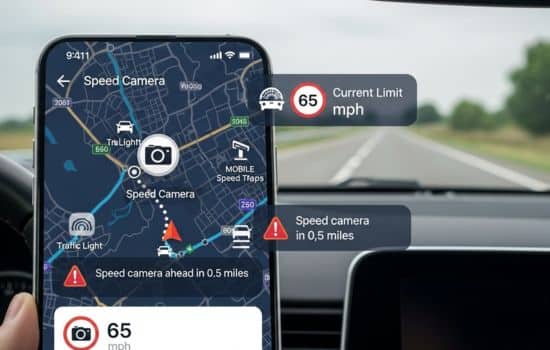
Whether you’re a daily commuter navigating busy city streets or an occasional driver planning a long road trip, knowing where speed cameras are located can save you money and stress. These applications combine GPS technology with community-driven data to create comprehensive warning systems that keep you compliant with traffic laws.
The evolution of mobile technology has transformed how we interact with road infrastructure. Gone are the days when drivers relied solely on physical radar detectors or memorized camera locations. Today’s smartphone apps offer sophisticated features that go far beyond simple alerts, providing valuable insights into traffic patterns, accident reports, and even police presence.
📱 Why Traffic Radar Detection Apps Matter
Speed cameras and traffic enforcement systems have multiplied across highways and urban areas worldwide. While these devices serve important safety functions, they can also result in unexpected fines for drivers who momentarily exceed limits or miss signage in unfamiliar areas.
Traffic radar apps address this challenge by creating a collaborative network where drivers share real-time information. This crowdsourced approach means the data stays current and reflects actual road conditions, unlike static databases that quickly become outdated.
Beyond avoiding tickets, these applications promote safer driving habits. When you receive advance warnings about upcoming cameras, you naturally become more aware of your speed and surroundings. This heightened awareness often extends beyond camera zones, creating better overall driving practices.
🚗 How These Applications Actually Work
Most traffic radar apps operate through a combination of GPS positioning, crowdsourced reporting, and database integration. When you open the app while driving, it continuously tracks your location and cross-references it with known camera positions stored in its system.
The magic happens when the community participates. Users report new cameras, confirm existing ones, or flag removals when enforcement equipment changes location. This constant feedback loop ensures the information remains accurate and reliable for everyone using the service.
Advanced algorithms process this incoming data, filtering out false reports and validating legitimate ones based on multiple confirmations. The result is a self-correcting system that becomes more accurate as more people contribute to it.
Real-Time Alerts and Notifications 🔔
When you approach a detected radar location, the app sends visual and audio alerts. The notification timing adjusts based on your current speed, giving you adequate warning to check your speedometer and adjust if necessary without sudden braking that could cause accidents.
Most applications allow customization of alert preferences. You can choose how far in advance you want warnings, select different sound options, and even set parameters for what types of cameras trigger notifications—fixed cameras, mobile units, red light cameras, or average speed zones.
🌟 Top Features to Look For
Not all traffic radar apps offer the same capabilities. Understanding what features provide the most value helps you choose the right application for your specific needs and driving patterns.
- Real-time community updates: Active user bases provide fresher, more accurate data
- Multiple camera types: Detection for speed cameras, red lights, and mobile enforcement
- Offline functionality: Downloaded maps work without constant data connection
- Route planning: Integration with navigation to avoid camera-heavy routes
- Speed limit display: Shows current legal limits alongside your actual speed
- Accident and hazard alerts: Warnings beyond just enforcement cameras
- User interface clarity: Easy-to-read displays that don’t distract from driving
Community-Driven Intelligence 🤝
The most powerful aspect of modern radar apps is their social component. When thousands or millions of drivers contribute observations, the collective knowledge becomes incredibly valuable. Someone who drives through an area daily can confirm camera positions, while travelers provide updates about new installations on less-traveled routes.
This community aspect extends beyond cameras. Users report traffic jams, road debris, broken-down vehicles, weather hazards, and police activity. What begins as a camera detection tool evolves into a comprehensive driving companion that enhances safety and efficiency.

📊 Comparing Different App Approaches
Various applications take different philosophical approaches to radar detection and traffic navigation. Some focus primarily on speed camera warnings with minimal additional features, while others integrate detection into full-featured navigation platforms.
| Feature Type | Dedicated Radar Apps | Full Navigation Apps |
|---|---|---|
| Camera Database | Extensive and specialized | Comprehensive through community |
| Navigation | Basic or none | Advanced turn-by-turn |
| Battery Usage | Lower consumption | Higher due to multiple features |
| Learning Curve | Minimal setup required | More features to master |
| Additional Features | Focused on enforcement | Traffic, gas prices, points of interest |
Integration with Vehicle Systems 🚘
Modern cars increasingly support smartphone integration through systems like Android Auto and Apple CarPlay. The best radar apps offer compatibility with these platforms, displaying alerts directly on your vehicle’s infotainment screen without requiring you to mount your phone separately.
This integration provides larger, easier-to-read displays while keeping your phone charged and accessible. Voice commands allow you to report hazards or interact with the app without taking your hands off the wheel or eyes off the road.
⚖️ Legal Considerations and Ethical Use
The legality of radar detection apps varies significantly by country and region. In many places, these applications remain completely legal, protected under freedom of information principles since they rely on publicly available data and user reports rather than active radar jamming technology.
However, some jurisdictions have enacted restrictions or outright bans. European countries show particular variation—perfectly legal in the United Kingdom and Netherlands, but restricted in France and Switzerland under certain conditions. Before relying on these apps, especially when traveling internationally, research local regulations to ensure compliance.
From an ethical standpoint, these apps work best when viewed as tools for compliance rather than loopholes. They help you stay aware of speed limits and drive more attentively, which serves the same safety goals that enforcement cameras aim to achieve.
🔧 Maximizing App Effectiveness
Simply downloading a radar detection app isn’t enough—you need to use it strategically to gain maximum benefit. Several best practices can significantly improve your experience and the value you derive from these tools.
First, keep the app updated. Developers constantly refine databases, improve algorithms, and add features. Enabling automatic updates ensures you always have the latest camera locations and software improvements.
Second, contribute to the community. When you spot a new camera or notice an old one has been removed, take a moment at a safe stopping point to report it. Your input helps fellow drivers and improves overall data quality.
Optimal Settings Configuration ⚙️
Spend time customizing notification settings based on your driving environment. Urban drivers might want shorter warning distances to avoid constant alerts, while highway travelers benefit from earlier notifications that allow more gradual speed adjustments.
Adjust audio volume carefully—alerts should be noticeable without being startling. Some apps offer different alert tones for various camera types, helping you understand at a glance what kind of enforcement you’re approaching.
Consider enabling battery-saving modes for longer trips. Many apps offer reduced-frequency updates that still provide adequate warnings while consuming less power, ensuring your phone lasts throughout extended drives.
📍 Beyond Speed Cameras: Additional Benefits
While radar detection forms the core functionality, most modern apps have evolved into comprehensive driving assistants. Understanding these additional features helps you extract more value from the applications you’re already using.
Traffic prediction uses historical data and real-time reports to forecast congestion before you encounter it. This allows proactive route changes that save time and reduce frustration, particularly valuable for daily commuters with flexible route options.
Parking assistance helps locate available spaces near your destination, especially useful in crowded urban centers where finding parking can consume more time than the drive itself. Some apps even integrate payment features for parking meters and lots.
Trip Statistics and Driving Insights 📈
Many applications now track your driving patterns, providing statistics about distances traveled, average speeds, and routes taken. This data can prove useful for business mileage tracking, understanding your commuting patterns, or simply satisfying curiosity about your driving habits.
Some premium versions offer advanced analytics that highlight aggressive driving behaviors, helping you identify areas for improvement that could reduce fuel consumption and wear on your vehicle while enhancing safety.
🌐 The Future of Radar Detection Technology
Artificial intelligence and machine learning continue transforming what these apps can accomplish. Predictive algorithms are becoming sophisticated enough to anticipate camera placements based on accident statistics, traffic patterns, and enforcement trends.
Integration with vehicle-to-infrastructure communication systems represents another frontier. As connected car technology matures, vehicles may receive camera location data directly from traffic management systems, creating official, always-accurate databases that complement community reporting.
Augmented reality features are emerging in premium applications, overlaying directional arrows and alerts directly onto your forward view through your phone camera or compatible heads-up displays. This technology reduces the need to glance away from the road to check your phone screen.
💡 Smart Driving Goes Beyond Technology
While radar detection apps provide valuable assistance, they work best as part of a broader approach to responsible driving. Technology should enhance, not replace, fundamental safe driving practices like maintaining appropriate speeds, staying focused, and planning trips with adequate time margins.
These applications shine when they reduce anxiety about enforcement and allow you to focus more attention on actual road conditions. The mental bandwidth freed from constantly worrying about cameras can be redirected toward watching for pedestrians, anticipating other drivers’ actions, and responding to changing conditions.
Consider these tools as part of a driving ecosystem that includes regular vehicle maintenance, route planning, rest breaks on long trips, and ongoing improvement of your driving skills. Technology amplifies good habits but cannot compensate for fundamentally unsafe practices.
🎯 Choosing the Right App for Your Needs
With dozens of options available across app stores, selecting the ideal radar detection application depends on your specific requirements, driving frequency, and feature preferences. Start by considering whether you need a standalone radar detector or prefer an all-in-one navigation solution with integrated warnings.
Evaluate the user community size in your region. An app with millions of global users might have sparse coverage in your local area, while a smaller app popular in your country could provide superior data. Check recent reviews from users in your location to gauge actual performance.
Test several options using free versions or trial periods. Real-world usage reveals which interfaces you find intuitive, which alert styles suit your preferences, and which apps offer the best coverage on your regular routes.
Battery consumption and data usage matter, especially if you drive frequently or have limited mobile plans. Monitor these metrics during testing to ensure your chosen app won’t drain resources to the point of frustration.
🔐 Privacy and Data Security Considerations
Location-based apps necessarily collect data about your movements and driving patterns. Reputable developers maintain transparent privacy policies explaining what information they gather, how they use it, and what protections they implement.
Review privacy settings within your chosen app. Most offer options to limit data sharing, anonymize contributions, or restrict background location access. Balance privacy preferences against functionality—some features require continuous location access to work effectively.
Consider the trade-off between free and paid versions. Free apps typically monetize through advertising or aggregate data sales, while paid versions often offer enhanced privacy along with additional features. Your comfort level with data sharing should inform this decision.
🚀 Getting Started Today
Ready to enhance your driving experience with radar detection technology? Begin by downloading one of the popular applications from official app stores. Take a few minutes to complete the initial setup, granting necessary permissions for location access and notifications.
Familiarize yourself with the interface while parked, exploring menu options and adjusting settings before driving. Test alerts by simulating approaches to known camera locations, ensuring you understand how warnings appear and sound.
Start with a conservative approach—use the app on familiar routes where you already know camera locations. This allows you to verify accuracy and build confidence in the system before relying on it in unfamiliar areas.
Join the community by making your first report when you spot a camera or hazard. Contributing feels good and helps you understand how the collaborative aspect works, making you a more engaged and valuable member of the network.
As you gain experience, you’ll discover which features provide the most value for your driving style. Over time, these apps become invisible assistants that keep you informed without demanding constant attention, allowing you to drive more confidently and safely wherever your journeys take you.
