
Anúncios
Learning Braille opens up a world of communication and accessibility. Whether you’re exploring it for personal development, supporting someone visually impaired, or simply fascinated by tactile languages, understanding Braille can transform how you connect with others.

Braille isn’t just a reading system—it’s a gateway to independence, education, and empowerment for millions worldwide. The raised dot patterns that form this tactile writing system have been helping blind and visually impaired individuals read and write for nearly two centuries. Today, technology has made learning Braille more accessible than ever before.
Modern mobile applications have revolutionized how people approach Braille education. These digital tools offer interactive lessons, instant feedback, and gamified experiences that make mastering this essential skill both enjoyable and efficient. Whether you’re a complete beginner or looking to refresh your knowledge, apps provide a flexible learning environment that adapts to your pace and schedule.
🔤 What Exactly Is Braille and Why Does It Matter?
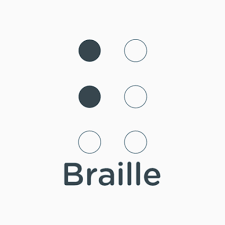
Braille is a tactile writing system invented by Louis Braille in 1824 when he was just 15 years old. This ingenious method uses patterns of raised dots arranged in cells of up to six dots to represent letters, numbers, punctuation marks, and even musical notation. Each cell contains two columns of three dots, creating 63 possible combinations.
The system’s brilliance lies in its simplicity and versatility. Unlike visual alphabets, Braille can be read through touch, making written communication accessible to those who cannot see. It’s used in virtually every language worldwide, with slight variations to accommodate different linguistic needs.
Understanding Braille goes beyond simple literacy—it represents independence and equal access to information. For visually impaired individuals, Braille proficiency correlates strongly with higher employment rates, better educational outcomes, and enhanced quality of life. Learning Braille as a sighted person also demonstrates empathy and opens opportunities for meaningful communication and support.
📱 How Mobile Apps Transform Braille Learning
Traditional Braille instruction often required specialized teachers, physical materials, and considerable financial investment. Mobile applications have democratized this process, making Braille education available to anyone with a smartphone or tablet. These digital platforms offer several compelling advantages over conventional methods.
Interactive apps provide immediate feedback, allowing learners to correct mistakes in real-time. Gamification elements like achievements, progress tracking, and leveled challenges keep users motivated and engaged. Many apps include audio components that pronounce letters and words, reinforcing the connection between Braille symbols and their meanings.
The convenience factor cannot be overstated. You can practice Braille during your morning commute, lunch break, or before bed. This flexibility accommodates busy schedules and allows for consistent, daily practice—the key to mastering any new language or writing system.
✨ Key Features to Look for in Braille Learning Apps
Not all Braille education apps are created equal. When selecting a learning platform, certain features significantly enhance the educational experience and improve retention rates.
- Progressive lesson structure: Starting with basic letters and gradually introducing numbers, punctuation, and contracted Braille
- Visual and tactile simulations: High-quality graphics that accurately represent raised dot patterns
- Practice modes: Multiple exercise types including recognition, writing, and reading comprehension
- Audio support: Voice guidance that helps connect symbols with sounds
- Progress tracking: Detailed statistics showing your improvement over time
- Offline functionality: The ability to learn without constant internet connectivity
- Multilingual support: Options to learn Braille in various languages
🎯 Understanding the Braille Alphabet Structure
Before diving into app-based learning, grasping the fundamental structure of Braille helps contextualize what you’ll be studying. The system is remarkably logical once you understand its organizational principles.
The Braille cell consists of six dots arranged in two vertical columns of three dots each. Dots are numbered 1-2-3 from top to bottom on the left column, and 4-5-6 on the right column. This standardized numbering system allows for precise descriptions of each character across languages and contexts.
The first ten letters of the alphabet (A through J) use only the top four dots (positions 1, 2, 4, and 5). The next ten letters (K through T) repeat these patterns while adding dot 3. The final six letters follow similar patterns with additional dots. This systematic approach makes memorization more manageable than random symbol assignment would allow.
🔢 Numbers, Punctuation, and Special Symbols
Braille’s elegance extends to its handling of numbers and punctuation. Rather than creating entirely new patterns, the system uses a number sign indicator (dots 3, 4, 5, 6) followed by the first ten letters of the alphabet to represent digits 1 through 0. This economical approach reduces the total number of unique patterns learners must memorize.
Punctuation marks utilize various dot combinations, with some requiring two cells for complex symbols. Mathematical notation, musical scores, and specialized scientific symbols have their own Braille codes, demonstrating the system’s adaptability to diverse communication needs.

💡 Practical Strategies for Mastering Braille Through Apps
Success in learning Braille depends not just on the tools you use, but how you use them. Implementing effective study strategies accelerates your progress and ensures long-term retention of what you’ve learned.
Consistency trumps intensity when learning any new skill. Fifteen minutes of daily practice produces better results than occasional marathon sessions. Apps make this consistency achievable by offering bite-sized lessons that fit into even the busiest schedules.
Start with uncontracted Braille (Grade 1), where each word is spelled out letter by letter. Once you’ve mastered the basic alphabet, numbers, and common punctuation, you can progress to contracted Braille (Grade 2), which uses abbreviations and contractions to increase reading speed and reduce space requirements.
🎮 Leveraging Gamification for Better Learning Outcomes
Modern Braille learning apps incorporate game-like elements that transform education into entertainment. These features aren’t just fun—they’re pedagogically sound methods that enhance motivation and information retention.
Challenge modes test your skills under time pressure, simulating real-world reading scenarios. Leaderboards create friendly competition, while achievement badges provide tangible recognition of milestones. Streak counters encourage daily practice by building momentum you won’t want to break.
These gamification elements trigger dopamine release in your brain, the same neurotransmitter associated with pleasure and motivation. This psychological reward system makes returning to your studies feel less like work and more like play, dramatically improving adherence to your learning schedule.
🌍 Real-World Applications of Braille Knowledge
Learning Braille extends far beyond academic exercise—it equips you with practical skills that create tangible value in everyday situations. Understanding this tactile writing system opens doors to meaningful interactions and professional opportunities.
For educators and healthcare professionals, Braille literacy enables better communication with visually impaired students and patients. Parents of blind children who learn Braille can actively participate in their child’s education, reading bedtime stories and helping with homework in ways that foster connection and independence.
In professional contexts, Braille knowledge distinguishes you as someone committed to accessibility and inclusion. Industries ranging from hospitality to technology increasingly recognize the importance of serving all customers, including those with visual impairments. Your Braille skills could become a valuable asset in customer service, product development, or accessibility consulting.
🏢 Braille in Public Spaces and Digital Interfaces
Once you understand Braille, you’ll start noticing it everywhere—on elevator buttons, restroom signs, medication labels, and ATM keypads. This awareness deepens your appreciation for accessibility design and helps you recognize when environments fall short of inclusive standards.
Digital Braille displays, called refreshable Braille displays, connect to computers and mobile devices, translating on-screen text into raised dots that users can read by touch. These devices bridge the gap between digital content and tactile reading, making websites, documents, and applications accessible to Braille readers.
📊 Comparing Popular Braille Learning Applications
Several high-quality apps have emerged as leaders in Braille education. Each offers unique features tailored to different learning styles and objectives. Understanding their strengths helps you choose the platform that best matches your needs.
| Feature | Braille Tutor | Braille Academy | General Apps |
|---|---|---|---|
| Interactive Lessons | ✅ Comprehensive | ✅ Game-based | ⚠️ Varies |
| Progress Tracking | ✅ Detailed stats | ✅ Achievement system | ⚠️ Limited |
| Offline Access | ✅ Full functionality | ✅ Core lessons | ❌ Often requires internet |
| Audio Support | ✅ Voice guidance | ✅ Sound effects | ⚠️ Inconsistent |
| Cost | Free with optional premium | Free with in-app purchases | Varies widely |
Both Braille Tutor and Braille Academy offer free entry points with optional premium features, making them accessible to learners regardless of budget. Their user interfaces are intuitive, reducing the learning curve associated with the app itself so you can focus on mastering Braille.
🧠 The Cognitive Benefits of Learning Braille
Acquiring Braille literacy offers unexpected cognitive advantages that extend beyond communication skills. Research in neuroplasticity reveals how learning tactile reading systems enhances brain function in surprising ways.
Braille reading activates regions of the brain typically associated with visual processing, demonstrating the brain’s remarkable ability to repurpose neural pathways. For sighted learners, this cross-modal activation strengthens spatial reasoning, pattern recognition, and sensory integration—skills that transfer to other areas of cognition.
The focused attention required for Braille study also enhances general concentration abilities. In our distraction-filled digital age, developing the capacity for sustained focus on complex tactile patterns provides mental discipline that improves performance across various tasks.
🤝 Building Empathy Through Tactile Learning
Learning Braille as a sighted person creates profound empathy for the experiences of visually impaired individuals. You gain firsthand insight into the challenges of navigating a world designed primarily for visual perception. This experiential understanding surpasses abstract sympathy, informing how you design spaces, create content, and interact with people who experience the world differently.
Many learners report that Braille study changes their perspective on accessibility and inclusion. Small design choices—like clear tactile signage or well-organized physical spaces—take on new significance when you understand how they impact daily navigation for blind individuals.
🚀 Advanced Braille: Moving Beyond the Basics
Once you’ve mastered fundamental Braille literacy, several advanced areas offer continued growth and specialization. These specialized branches expand your capabilities and open new application domains.
Contracted Braille (Grade 2) introduces 180 contractions and short-form words that reduce text length by approximately 25%. This system requires memorization of additional symbols but dramatically increases reading speed and efficiency. Most published Braille materials use this contracted form, making it essential for practical literacy.
Braille music notation provides blind musicians with access to written scores, using special symbols to represent notes, rhythms, and performance instructions. This specialized system requires understanding both standard Braille and musical theory, but opens the entire world of written music to tactile readers.
🔬 Technical and Scientific Braille
Mathematics, chemistry, and computer science each have specialized Braille codes that represent their unique symbolic systems. Nemeth Braille code, for example, handles mathematical notation including fractions, exponents, and complex equations. These technical variants ensure that blind students can fully participate in STEM education and careers.
Learning these specialized codes positions you to support students in technical fields or work on accessibility projects in scientific publishing, educational technology, or research institutions. The demand for professionals who understand both technical subjects and Braille notation continues to grow as educational inclusion advances.
💬 Connecting with the Braille Learning Community
Learning alongside others accelerates progress and provides motivation during challenging phases. Numerous online communities bring together Braille learners, educators, and native users who share resources, answer questions, and celebrate milestones.
Social media groups dedicated to Braille education offer daily practice prompts, troubleshooting advice, and encouragement from fellow learners. Many successful students attribute their persistence to community support, particularly during the initial weeks when progress feels slow.
Some apps include built-in social features like friend connections and shared challenges. These features transform solitary study into collaborative learning, introducing accountability and friendly competition that keeps you engaged with your educational goals.
🎓 Teaching Others: Sharing Your Braille Knowledge
As your Braille proficiency grows, opportunities emerge to teach others—whether formally or informally. Sharing knowledge reinforces your own understanding while contributing to broader accessibility literacy.
Parents, teachers, and volunteers who learn Braille through apps often become informal ambassadors for accessibility education. You might help a visually impaired neighbor with a reading project, volunteer at a school for the blind, or consult on accessibility improvements at your workplace.
Teaching others also reveals gaps in your own knowledge, motivating deeper study and mastery. The questions students ask push you to understand not just the “how” but the “why” behind Braille’s structure and conventions.
🌟 Your Journey Toward Braille Mastery Starts Now
The path to Braille literacy is more accessible today than ever before, thanks to innovative mobile applications that transform traditional education into interactive, engaging experiences. Whether you’re motivated by personal growth, professional development, or the desire to support visually impaired individuals in your life, app-based learning provides the tools you need to succeed.
Remember that every expert was once a beginner. The raised dot patterns that seem mysterious today will become second nature with consistent practice. Modern apps remove barriers of cost, location, and scheduling that once made Braille education difficult to access. Now, the only thing standing between you and this valuable skill is the decision to begin.
Download a Braille learning app today and commit to just fifteen minutes of daily practice. Within weeks, you’ll recognize letters and simple words. Within months, you’ll read basic sentences. Within a year, you could achieve functional Braille literacy—a skill that will serve you and others for a lifetime.
The tactile world of Braille awaits your exploration. Every cell you decode, every word you recognize, represents a step toward greater understanding, empathy, and connection. Start your learning journey today and discover how this elegant system of raised dots opens new dimensions of communication and accessibility.
