
Anúncios
If you’re passionate about strategic thinking and love games that challenge your mind, chess is the perfect activity to sharpen your intellect while having fun. ♟️


Chess has captivated minds for over 1,500 years, standing as one of humanity’s most beloved games of strategy and intellect. From ancient kingdoms to modern smartphones, this timeless game continues to attract millions of players worldwide who seek mental stimulation, competitive excitement, and personal growth.
Whether you’re a complete beginner or someone looking to refine your tactical skills, learning chess opens up a fascinating world where every move matters. The beauty of this game lies not just in winning, but in the endless learning journey it provides, teaching patience, foresight, and analytical thinking along the way.
🧠 Why Chess Is the Ultimate Brain Workout
Chess isn’t just a game—it’s a comprehensive mental exercise that engages multiple cognitive functions simultaneously. When you play chess, you’re not simply moving pieces around a board; you’re training your brain to think critically, plan ahead, and solve complex problems under pressure.
Research has consistently shown that regular chess practice improves memory retention, enhances concentration, and develops pattern recognition skills. Players learn to visualize multiple scenarios simultaneously, weighing the consequences of each potential move before committing to action. This level of strategic thinking translates beautifully into real-world decision-making abilities.
The game demands both creative and logical thinking, making it a balanced workout for both hemispheres of your brain. You’ll need artistic imagination to conceive bold attacking plans while maintaining mathematical precision in calculating tactical sequences. Few activities offer such comprehensive cognitive development in such an engaging package.
♟️ Getting Started: The Basics Everyone Should Know
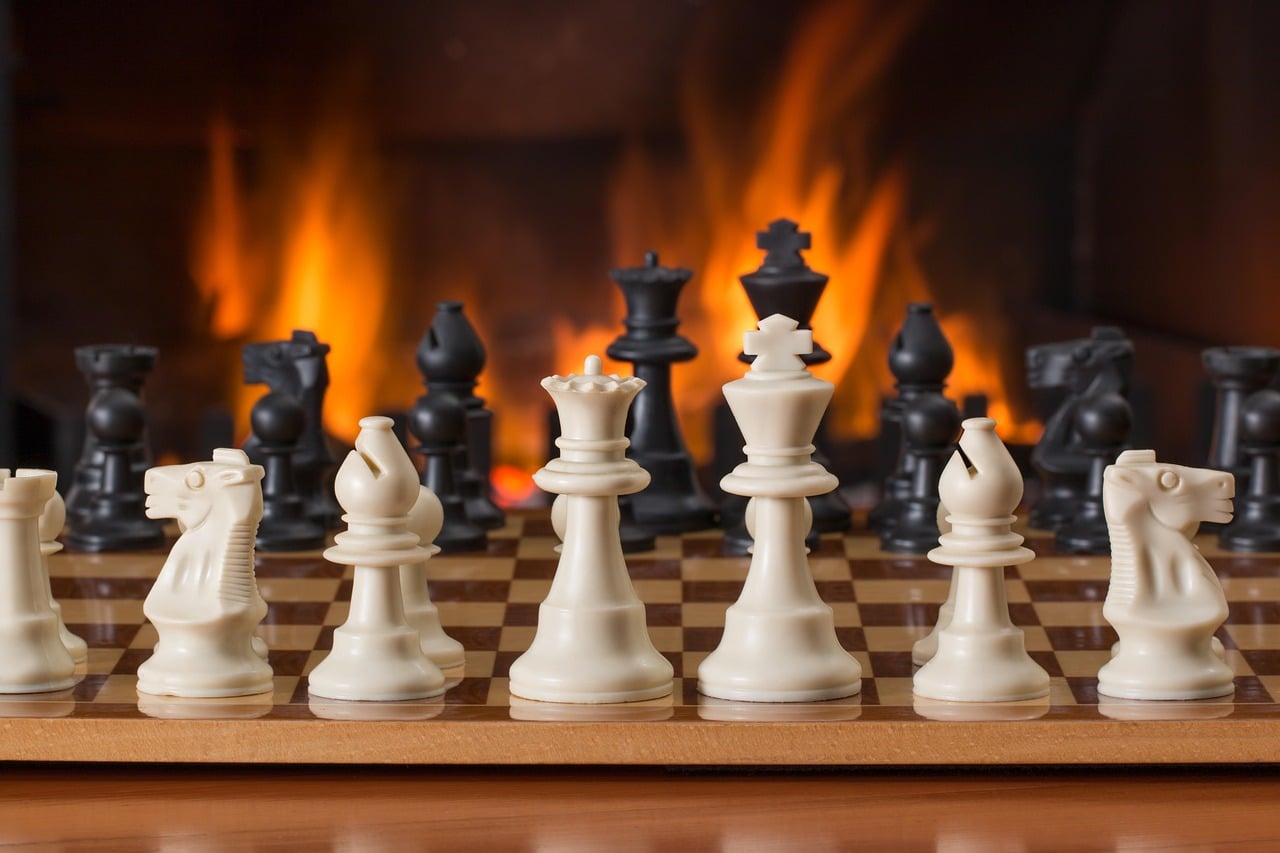
Beginning your chess journey might seem intimidating at first, but the fundamental rules are surprisingly straightforward. The game is played on an 8×8 board with 64 squares alternating between light and dark colors. Each player starts with 16 pieces: one king, one queen, two rooks, two bishops, two knights, and eight pawns.
Understanding how each piece moves is your first essential step. The king moves one square in any direction, while the queen—the most powerful piece—can move any number of squares horizontally, vertically, or diagonally. Rooks travel in straight lines along ranks and files, bishops move diagonally across squares of one color, and knights make their unique L-shaped jumps.
Pawns, though seemingly simple, have fascinating movement rules. They advance one square forward (or two squares on their first move) but capture diagonally. When a pawn reaches the opposite end of the board, it promotes to any other piece—usually a queen. This transformation moment often becomes the turning point in many games.
Setting Up Your Board Correctly
Proper board orientation matters more than many beginners realize. Always position the board so that each player has a light-colored square in the bottom-right corner. The rooks occupy the corners, knights sit next to them, followed by bishops. The queen goes on her own color (white queen on a light square, black queen on a dark square), with the king taking the remaining central square.
This setup ensures both players start from an equal strategic position. Taking a moment to verify correct placement before starting prevents confusion and helps you develop proper spatial awareness of the board’s geography—an essential skill as you progress.
🎯 Strategic Thinking: Where Chess Gets Fascinating
Once you’ve mastered the basic moves, chess transforms into an intricate dance of strategy and tactics. Strategy refers to your long-term planning—the overall structure and goals of your position. Tactics, meanwhile, are the specific sequences and combinations that achieve concrete advantages in the short term.
Successful players develop the ability to think several moves ahead, anticipating their opponent’s responses and preparing counter-responses. This isn’t about memorizing endless variations; it’s about understanding principles and recognizing patterns. With practice, you’ll start seeing opportunities for forks, pins, skewers, and discovered attacks that might have been invisible to you weeks earlier.

Control of the center forms the foundation of sound chess strategy. The four central squares—e4, d4, e5, and d5—represent the board’s most valuable real estate. Pieces positioned centrally exert influence across more squares, giving you greater flexibility and attacking potential. Most opening systems aim to establish and maintain central presence while developing pieces harmoniously.
The Three Phases of Every Chess Game
Chess games naturally divide into three distinct phases, each requiring different skills and approaches. The opening covers roughly the first 10-15 moves, where players develop their pieces, control the center, and safeguard their kings through castling. Learning a few basic opening principles proves far more valuable than memorizing specific move sequences.
The middlegame represents chess at its most complex and creative. With pieces fully mobilized, players launch attacks, defend vulnerabilities, and maneuver for positional advantages. This phase rewards tactical awareness, positional understanding, and the ability to calculate concrete variations. Many games reach their decisive moments during these critical middlegame battles.
Endgames occur when most pieces have been traded off, typically leaving kings, pawns, and perhaps one or two other pieces per side. Despite the reduced material, endgames demand precise technique and deep knowledge. A single tempo or a seemingly insignificant pawn placement can determine whether a position is won, drawn, or lost.
📚 Learning Resources That Actually Work
The digital age has revolutionized chess education, providing unprecedented access to world-class instruction. Online platforms now offer interactive lessons, puzzle trainers, and opportunities to play against opponents of similar strength from anywhere on Earth. This democratization of chess knowledge means anyone with determination can reach impressive skill levels.
Mobile apps have become particularly valuable for aspiring players. They allow you to practice tactical puzzles during commute time, analyze your games with powerful engines, and play quick matches whenever you have a few spare minutes. The best apps combine entertainment with structured learning, making improvement feel like play rather than work.
Traditional resources shouldn’t be overlooked either. Classic chess books by masters like Bobby Fischer, Garry Kasparov, and Anatoly Karpov contain timeless wisdom that remains relevant regardless of technological advances. Reading annotated games by strong players helps you understand the thought processes behind master-level decisions.
The Power of Puzzle Solving
Tactical puzzles represent one of the most efficient training methods available to chess improvers. These positions, extracted from real games, present specific challenges: find the winning move, save a difficult position, or execute a forced checkmate sequence. Regular puzzle practice sharpens your pattern recognition and calculation abilities dramatically.
Start with easier puzzles and gradually increase difficulty as your skills develop. The goal isn’t just finding the right move but understanding why it works and recognizing similar patterns in your games. Many players report breakthrough improvements in their playing strength after committing to daily puzzle practice.
🏆 Competitive Play: Testing Your Skills
Playing against real opponents provides irreplaceable learning experiences that studying alone cannot match. Every game tests your preparation, challenges your understanding, and reveals gaps in your knowledge. Both victories and defeats offer valuable lessons—wins build confidence while losses highlight areas needing improvement.
Online chess platforms host millions of players across all skill levels, ensuring you’ll always find appropriate opponents. Rating systems match you against similarly skilled players, creating competitive balance and meaningful games. Many platforms also offer tournaments, clubs, and social features that build community around shared passion.
For those seeking offline competition, chess clubs exist in virtually every city worldwide. These gathering places for enthusiasts provide opportunities for face-to-face games, discussion, and friendship. The social aspect of chess—sitting across from an opponent, shaking hands before and after—adds a dimension that digital play cannot fully replicate.
🌟 The Life Skills Chess Develops
Beyond the 64 squares, chess cultivates abilities that enhance performance in academic, professional, and personal contexts. The game teaches patience in a world increasingly dominated by instant gratification. You learn that rushing leads to mistakes while thoughtful deliberation produces better results—a lesson applicable to countless real-world situations.
Chess also builds resilience and emotional regulation. Everyone experiences the frustration of blundering a winning position or the disappointment of a tournament loss. Learning to accept these setbacks gracefully, analyze what went wrong, and return stronger develops psychological toughness valuable throughout life.
The game’s emphasis on personal responsibility proves particularly instructive. Unlike team sports where you might blame teammates, chess offers no such comfort. Every result stems directly from your decisions. This accountability encourages honest self-assessment and continuous improvement—attitudes that drive success in any field.
Chess and Academic Performance
Numerous studies have documented correlations between chess training and improved academic outcomes, particularly in mathematics and reading comprehension. The logical thinking required for chess naturally complements mathematical problem-solving, while game analysis develops the same skills used in textual interpretation.
Schools incorporating chess programs often report increased student focus, better behavior, and enhanced critical thinking abilities. The game’s structured environment teaches children to think before acting, consider consequences, and plan ahead—foundational skills for academic success and responsible citizenship.
💡 Common Mistakes Beginners Make (And How to Avoid Them)
New players typically fall into predictable traps that hinder their improvement. Recognizing these common errors helps you avoid frustrating plateaus and accelerate your development. Perhaps the most frequent mistake involves moving pieces aimlessly without purpose or plan. Every move should contribute to your position—developing a piece, controlling key squares, or improving king safety.
Another widespread error concerns neglecting king safety. Beginners often become so focused on attacking that they forget to castle or leave their king vulnerable in the center. Remember that the game’s objective isn’t capturing your opponent’s pieces but checkmating their king—protecting yours must remain a constant priority.
Trading pieces without considering the resulting position also causes problems for developing players. Not all exchanges are equal. Sometimes trading removes a strong enemy piece or simplifies a complex position to your advantage. Other times, trading away your active pieces for passive opponents weakens your position. Evaluate each trade carefully based on specific circumstances.
🚀 Advanced Concepts to Explore as You Improve
As your understanding deepens, you’ll encounter increasingly sophisticated strategic concepts. Positional chess—the art of small advantages and long-term planning—becomes more accessible. You’ll appreciate subtle factors like pawn structure, piece coordination, and prophylactic thinking that prevent opponent counterplay before it begins.
Dynamic play represents another dimension of advanced chess. Sometimes optimal strategy requires accepting positional weaknesses in exchange for active pieces and immediate threats. Balancing static and dynamic factors—knowing when to play for position and when to force concrete tactics—separates strong players from average ones.
Opening theory extends far beyond basic principles at higher levels. While beginners should focus on fundamental development, experienced players benefit from studying specific variations suited to their style. Whether you prefer aggressive gambits, solid positional systems, or hypermodern approaches, finding openings that match your personality makes the game more enjoyable and successful.
🎮 Why Now Is the Perfect Time to Learn Chess
Chess has experienced a remarkable renaissance in recent years, driven by streaming platforms, popular culture references, and the global shift toward digital entertainment. The community has never been larger, more diverse, or more welcoming to newcomers. Resources that once required expensive books or private coaches are now freely available to anyone with internet access.
The game’s accessibility makes it ideal for modern lifestyles. You can play a complete game in five minutes or study complex positions for hours—whatever fits your schedule. Geographic location no longer limits opponents or learning resources. Whether you live in a bustling city or remote countryside, the global chess community is always just a click away.
Perhaps most importantly, chess offers meaningful engagement in an age of passive entertainment. Unlike activities that merely occupy time, chess actively challenges you, rewards effort with improvement, and provides a lifetime of depth to explore. Starting your chess journey today means joining millions who’ve discovered that the ancient game remains remarkably relevant for modern minds.
♔ Your First Steps on the Chessboard Journey
Beginning chess requires no special equipment or athletic ability—just curiosity and willingness to learn. Start by downloading a reputable chess app that offers lessons for beginners. Spend your first sessions familiarizing yourself with piece movements through interactive tutorials. Don’t worry about strategy yet; simply ensure you understand the fundamental rules and mechanics.
Once comfortable with basic movements, play your first games against beginner-level computer opponents. These early matches will feel awkward as you consciously think through each move, but this deliberate practice builds essential foundations. Accept that you’ll make mistakes—everyone does. Each blunder teaches something valuable if you take time to understand what went wrong.
Gradually increase challenge levels as your confidence grows. Introduce one new concept at a time—perhaps controlling the center for a week, then focusing on king safety the following week. This incremental approach prevents overwhelming yourself while steadily expanding your understanding. Before long, you’ll notice yourself spotting tactics and forming plans that once seemed impossibly complex.
Join online communities where fellow learners share their experiences, ask questions, and celebrate improvements. Chess attracts remarkably supportive enthusiasts who remember their own beginner struggles and eagerly help newcomers. Don’t hesitate to ask for advice or game analysis—you’ll find the chess community generally generous with knowledge and encouragement.
Set realistic goals that motivate without discouraging. Perhaps aim to play three games weekly and solve ten tactical puzzles daily. Track your progress through rating improvements or mastery of specific concepts. Celebrate milestones—your first checkmate delivery, winning your first pawn endgame, or executing your first knight fork. These achievements mark genuine progress on your chess journey.
Most importantly, remember that chess should be enjoyable. While improvement requires effort, the process itself offers countless satisfying moments. That brilliant move you didn’t see initially but discovered through analysis. The opponent’s trap you successfully avoided. The endgame you converted from a slight advantage to victory. These experiences make chess endlessly rewarding, regardless of your absolute strength level.
The relationship between chess and mental development extends beyond immediate game situations. Regular players often report improved problem-solving abilities in professional contexts, better emotional regulation during stressful situations, and enhanced ability to visualize complex systems. These transferable benefits make chess valuable even for those who never compete seriously—the cognitive training alone justifies the time investment. ✨
Whether you aspire to tournament competition or simply want an engaging hobby that exercises your mind, chess welcomes you. The board awaits, offering infinite possibilities within its elegant simplicity. Every grandmaster began as a beginner uncertain which piece moved where. Your journey starts with a single move—why not make it today?
